
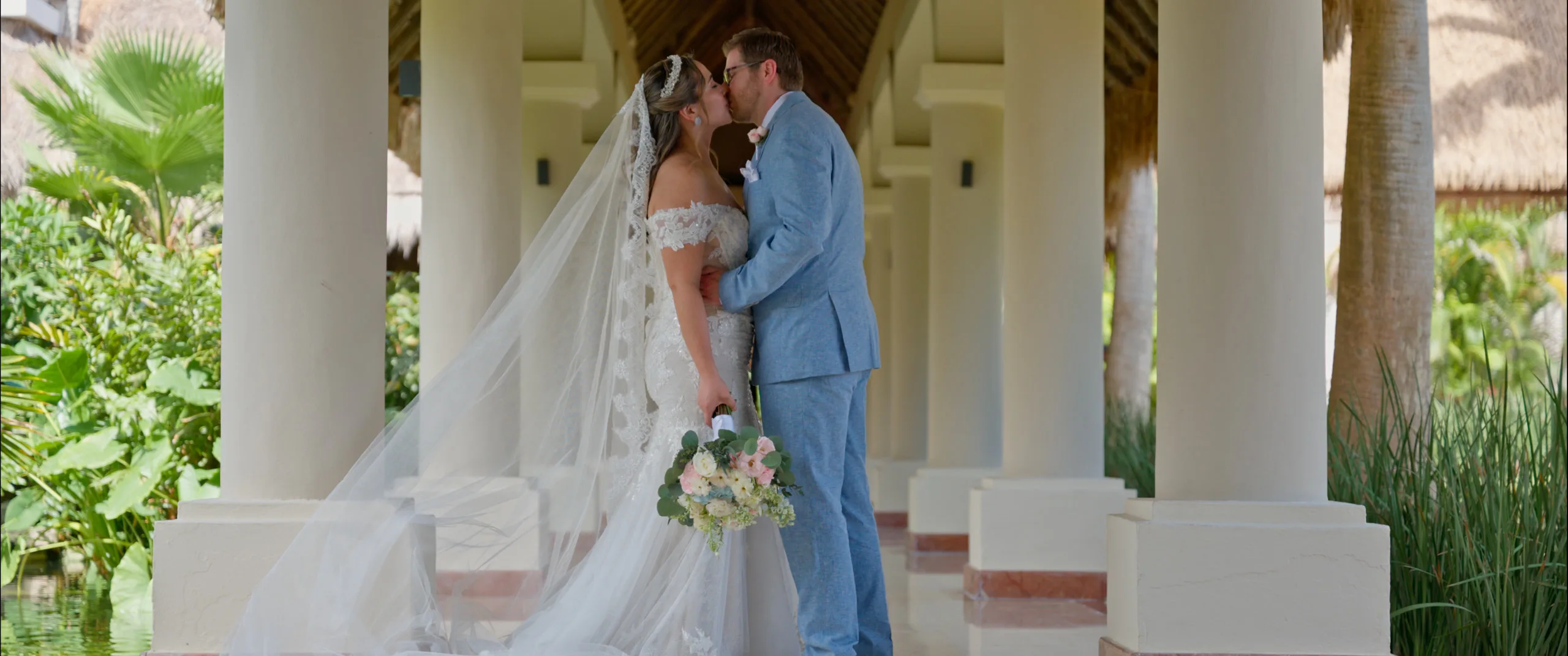
Choosing a wedding videographer is one of the decisions that couples most consistently underestimate during the planning process and one of the ones they most consistently regret getting wrong (or not getting at all). Photos freeze a moment. A film preserves how the day actually felt: the sound of vows spoken quietly, the laughter during a speech, the way the light moved across the ceremony in the late afternoon. Those things don't exist in a photograph.
For destination weddings in Cancún and Riviera Maya, the decision carries additional weight. You're choosing someone you'll likely never meet before the wedding day, based entirely on what you can see online. The visual environment is demanding (Caribbean light, tropical humidity, beach wind, cenote interiors) and the logistics of filming at a resort involve a layer of coordination that doesn't exist at a local venue. Getting this right requires more than finding a reel you like on Instagram.
Choosing the right wedding planner → What couples with high budgets actually discover when choosing a destination wedding planner in Mexico (and what most planning guides don't cover).Why Wedding Videography Quality Varies So Much
Wedding videography is one of the most technically and creatively demanding fields in visual production. On a single day, a filmmaker has to handle live documentary coverage, narrative construction, sound design, color work, and the kind of split-second decision-making that comes with events that happen once and don't repeat.
Two videographers can both describe themselves as "cinematic storytellers" and produce films that have almost nothing in common. Some are genuinely building a narrative around a specific couple. Others are applying the same template (same structure, same music genre, same editing rhythm) to every wedding they film. The portfolio looks good. The film feels generic.
Part of what drives this variation is that the wedding industry is almost entirely unregulated and highly fragmented. There is no licensing requirement, no industry body, and no standard for what "full coverage" or "cinematic edit" actually means. Two contracts with identical language can represent completely different levels of craft, preparation, and commitment.
Understanding how a filmmaker tells stories (not just how their images look) can give you an idea of how this can make a huge difference in the final film.
Two Very Different Approaches to Wedding Films
While there are many variations in style, most wedding videographers fall broadly into two categories.
Understanding the difference between these two approaches before you start your search will save you a significant amount of confusion.
Highlight-focused videographers build short films designed for social media. Typically two to five minutes, driven by music, heavy on slow motion and cinematic visuals. These films can look genuinely beautiful. What they don't show is how the filmmaker handles pacing over eight hours, whether they captured the full arc of your vows, or what the speeches actually sounded like. A highlight reel represents the best thirty seconds from every wedding in a portfolio, sometimes shot by different people entirely.
Documentary filmmakers build films around the real story of the day. The vows are in the film because the vows are the film. The speeches, the ambient audio from the reception, the quiet moment between the couple before the ceremony. These aren't cutaways to fill time between cinematic shots, they're the foundation of how the story gets told. The result is a film that feels completely specific to your wedding, not a template with your names on it. Five years from now, when you watch it again, you'll hear the actual voice of the person giving the toast, not a music track layered over a montage. This approach tends to create films that feel more personal and emotionally rich when couples watch them years later.
Neither approach is wrong for everyone. But couples should know which one they're choosing before they sign anything, not after the film arrives.
Documentary vs cinematic: why it's the wrong question → Documentary and cinematic are not rival styles. One describes how a wedding is captured, the other describes how the film feels. Understanding the difference changes how you choose a videographer.Red Flags Couples Should Watch For
The wedding videography industry has produced some well-documented failure cases in recent years, and destination weddings add a layer of vulnerability because everything happens remotely. A few patterns appear consistently in the cases that go wrong.
A portfolio made entirely of highlight reels with no full films available is a significant signal. Any filmmaker who has been working seriously for more than a year has full films. If they're not showing them, ask yourself why. A highlight reel represents the best thirty seconds from every wedding in a portfolio, sometimes shot by different people entirely. It tells you almost nothing about how that filmmaker handles pacing over eight hours, or whether they actually captured the arc of the day.
Films that rely heavily on slow motion and cinematic visuals but contain very little real audio from the ceremony or speeches are worth examining carefully. A visually impressive film that has no vows, no speeches, and no ambient sound from the day can feel emotionally distant when you watch it a year later. The audio is not a secondary element, it's often what makes a wedding film worth returning to. If a portfolio shows beautiful images but the films are mostly music from start to finish, that's a deliberate editorial choice, not a coincidence.
Films that all look identical across a portfolio (same pacing, same music style, same structural beats regardless of the wedding) suggest a templated process rather than a couple-specific approach. Every wedding is different. The films should reflect that.
Unusually fast delivery promises are worth questioning. A documentary film built around real audio, narrative editing, and careful color work takes time. Promises of delivery in two or three weeks often reflect a simplified editing process rather than a faster version of the same quality. The time invested in post-production is directly visible in the final film.
Vague or unsigned contracts are where the most serious problems originate. A professional contract should specify exactly who will film your wedding, the precise delivery timeline, what happens to the footage after delivery, and what the cancellation policy covers for both parties. The cases that end in lost footage or disputes almost always involve contracts that were either too vague to enforce or never signed at all.
No verifiable presence beyond Instagram is worth slowing down for. A legitimate videographer who has been working in this market leaves a traceable trail (Google reviews, mentions in planning forums, references from past couples willing to speak directly). A professional-looking account with no external verification is not the same as a professional.
What wedding videography actually costs at this level → How much does a good wedding videographer cost? Learn what affects pricing, what couples should expect, and how to choose the right filmmaker for your wedding.The Reality Couples Should Be Aware Of
Most wedding filmmakers are professionals who genuinely care about their work and take the responsibility seriously. But destination weddings in Mexico create a specific vulnerability that doesn't exist when hiring locally, and the cases that go wrong tend to go wrong in predictable ways.
Planning from another country means every evaluation happens remotely. Couples are making significant financial commitments based on a portfolio, a website, and an email exchange with someone they've never met. That distance makes it harder to catch warning signs early, and it removes the informal layers of verification that local hiring provides: the ability to visit a studio, speak to a recent client in person, or ask a local photographer who they've actually worked with and trust.
The issues that destination wedding couples report most consistently include communication that goes quiet after the deposit is paid, subcontracted teams arriving on the wedding day without prior notice (meaning the couple never actually met the person filming their wedding) and delivery timelines that stretch well beyond what was discussed. In more serious cases: files that are lost or never delivered, and vendors who become unreachable once the wedding has passed and the leverage is gone.
What makes these situations harder to resolve across borders is that most domestic consumer protections don't apply. There is no international equivalent of a local consumer protection agency, and by the time a delivery failure becomes undeniable, the practical options for recourse are limited.
None of this is meant to suggest that most vendors operate this way, they don't. But these are documented patterns, not hypothetical ones, and couples who understand them going in are in a much better position to ask the right questions, read contracts carefully, and choose someone with a verifiable track record rather than just a polished Instagram presence.
What to Look for in a Destination Wedding Filmmaker Specifically
Filming a destination wedding in Cancún or Riviera Maya is not the same as filming a wedding at a hotel ballroom in Chicago. The technical demands are different, the logistics are different, and the preparation required is different.
A filmmaker who works in this region regularly will have solved problems that a first-time visitor encounters for the first time at your wedding. Beach ceremonies in direct Caribbean sun require specific exposure management. Without the right technique, the ocean goes from turquoise to pale gray in the footage, and the sky blows out completely. Humidity in Riviera Maya averages 80 to 90% year-round, which affects lenses, batteries, and audio equipment in ways that only consistent experience in that environment prepares you for. Cenotes require supplemental lighting approaches that have nothing to do with outdoor tropical ceremonies. These aren't minor variables, they're the difference between a film that looks like Mexico and a film that could have been shot anywhere.
Coordination with the resort also matters in ways that aren't obvious from the outside. A filmmaker who has an existing relationship with properties in the corridor (or who has worked at your specific resort before) knows which coordinators to approach for timeline updates, where the light falls at ceremony time, and how vendor access is managed on the day. That knowledge doesn't show up in a portfolio but it's present in every decision made between noon and sunset.
The production background behind the filmmaker matters more than most couples realize. Someone who has spent years working in commercial production (where technical failure isn't an option and every minute of a shoot has real consequences) brings a different level of discipline to a wedding day than someone who learned their craft exclusively on weddings. That foundation shows in how they handle equipment, how they manage unexpected timeline changes, and how they approach the post-production process.
Among the filmmakers working in the Cancún and Riviera Maya corridor, Xavier Magaña Wedding Films is one of the few with a background rooted in high-pressure commercial production rather than the wedding industry alone. That foundation, combined with a documentary approach that prioritizes real audio, calibrated color work, and music chosen specifically for each film rather than pulled from a generic library, produces a result that feels distinct from the standardized output most couples encounter during their research. If the approach described throughout this guide resonates with what you're looking for, his work is worth looking at directly at his portfolio.
Questions That Reveal More Than a Portfolio
When you're speaking with a videographer, a few questions will tell you more about how they actually work than anything in their reel.
Ask them to walk you through how they prepare before a wedding. A filmmaker who scouts the venue in advance, researches the light at the specific time of the ceremony, and reaches out to the photographer before the day to align on how they'll share the space. That preparation produces a different result than someone who arrives at the venue on the morning of the wedding for the first time.
Ask how they handle the relationship with the photographer. On a wedding day, the photographer leads on positioning and posing. A videographer who understands this and communicates it clearly in advance (asking the photographer to keep audio space open during key moments) prevents the kind of on-day friction that ends up in the footage.
Ask how they approach music selection. There's a real difference between choosing music from a licensed library because it fits the emotional arc of a specific film, and using the same tracks across every delivery because they test well on social media. The answer tells you whether sound design is actually part of their process or a finishing touch applied at the end.
Why audio matters more than you think in wedding films → Years after a wedding, it's the voices that bring the day back: the vows, the speeches, the room. Why audio is the most underrated part of a wedding film, and what to ask before you book.Ask what their annual volume looks like. A filmmaker who limits their bookings to maintain quality and genuine attention to each couple is making a deliberate choice about their work. Someone who films forty weekends a year is operating a different kind of business.
Ask to see a full film from a wedding in a similar environment (beach ceremony, resort venue, cenote, hacienda). Not a highlight. A full film. How they handle the second hour tells you more than how they handle the opening thirty seconds.
What to look for in a videography contract before you sign →What a Wedding Film Is Actually For
The couples who most consistently feel good about their wedding film years later are the ones who thought about what they actually wanted it to be, not just how they wanted it to look.
A wedding film is not primarily for social media. It's not a trailer. It's a document of a specific day that will never happen again, and the people in it will not always be the same as they are now. The value of that document doesn't peak the week after the wedding. It compounds over time. The speech from your father sounds different five years later than it did the first time you watched it. The ambient sound of the ceremony (the music, the voices, the specific atmosphere of that place on that afternoon) is something no photograph can hold.
What separates a film that gets watched repeatedly from one that gets watched once is how specifically it captures your wedding, not how generically cinematic it looks. Remember, at the end the only thing that will take you back to that day will be your wedding film.
FREQUENTLY ASKED QUESTIONS
How do we know if a wedding videographer is actually good?
Watch full films, not highlight reels. A full film shows pacing, consistency, how they handle real audio, and whether the story they're telling feels specific to that couple or generic. Read reviews that include details — not just star ratings — and look for mentions on platforms outside the videographer's own website. Pay attention to how they communicate during the inquiry process: responsiveness, clarity, and genuine curiosity about your wedding are strong predictors of how they'll work throughout the planning period. Wedding directories like WeddingWire and The Knot can help with this, provided you understand how their rankings and featured placements actually work.
How long does it take to receive a wedding film?
A documentary film built around real audio, narrative editing, and careful color work takes time. Eight to twelve weeks is a realistic standard for a properly crafted film. Shorter delivery promises often reflect a simpler editing process rather than a faster version of the same quality. The delivery timeline should be in writing with the contract, not just communicated verbally.
What should be included in a wedding videography contract?
The contract should specify exactly who will film your wedding by name — not just the company — the precise delivery timeline with a contractually enforceable date, what the deliverables are in specific terms, the revision policy, the payment schedule, the cancellation policy for both parties, and what happens to the footage after delivery. If any of these are vague or absent, ask for them to be added before signing. Verbal assurances about turnaround time or who will be there on the day have no value without written terms.
What's the difference between a highlight reel and a wedding film?
A highlight reel is typically two to five minutes, music-driven, and designed for social media sharing. It represents the most visually striking moments of the day. A wedding film is a complete documentary — it includes vows, speeches, real audio, and the full narrative arc of the day. Most couples who have both describe the film as what they actually return to. The reel is for sharing. The film is for keeping.
How do I verify a wedding videographer in Mexico is legitimate?
Search the business name on Google and look for reviews across multiple platforms — not just the videographer's own site. Look for mentions in destination wedding planning forums and Facebook groups. Request references from past couples willing to speak by phone or video call. Confirm they have a verifiable physical presence in Mexico, not just a landing page and an Instagram account. Ask specifically about their experience at your resort or region, and whether they can provide a full film from a comparable venue. Legitimate professionals in this market leave a traceable trail.
How far in advance should I book a wedding videographer in Cancún or Riviera Maya?
For weddings in peak season — November through April — twelve to eighteen months in advance is realistic for filmmakers with a limited annual calendar. Filmmakers who cap their bookings to maintain quality fill up faster than high-volume studios. If you find someone whose work genuinely fits what you're looking for, early availability conversations are worth having even if your date feels far away.
What questions should I ask a wedding videographer before booking?
Ask how they prepare before the wedding day — specifically whether they research the venue, the light conditions, and coordinate with the photographer in advance. Ask how they approach music selection and whether they can walk you through how a recent film came together. Ask who specifically will film your wedding and what their contingency plan is if something prevents them from being there. Ask to see a full film from a similar environment. And ask what their delivery timeline looks like in writing, not just as an estimate.