
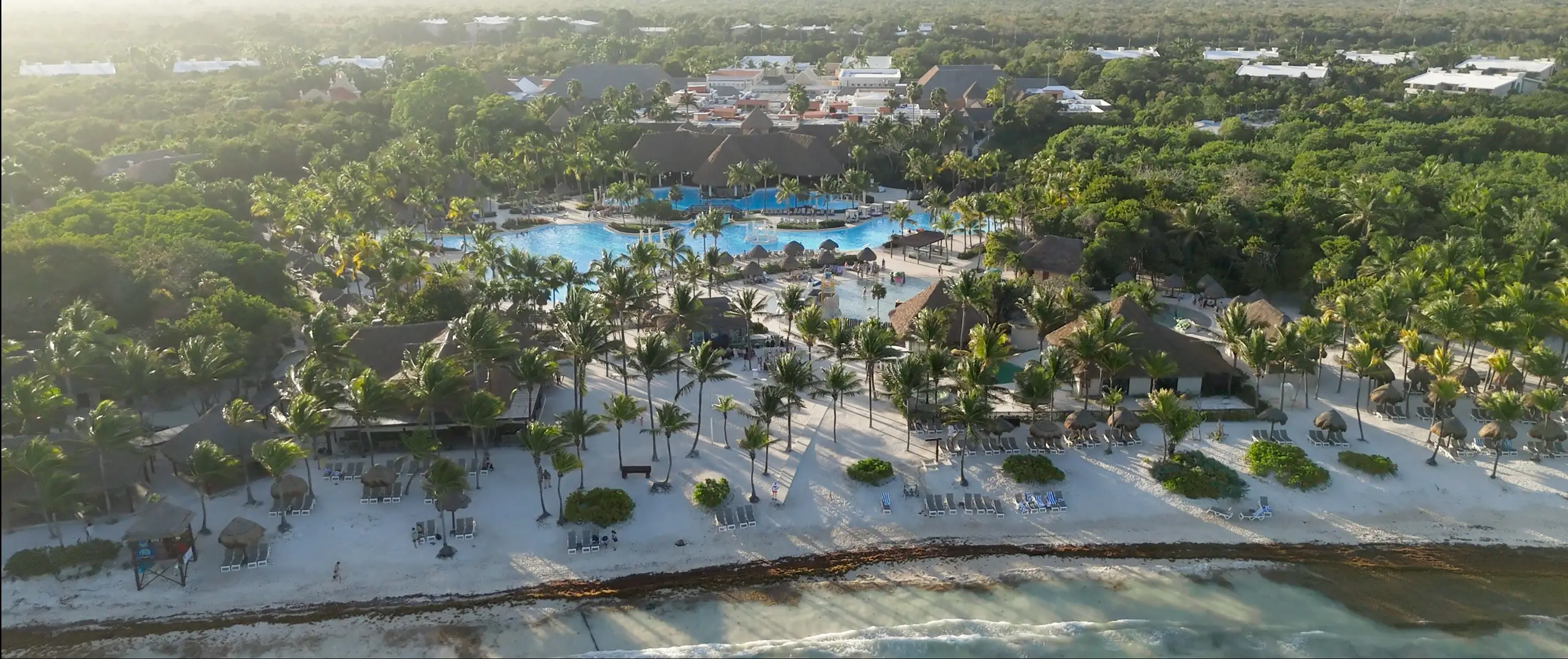
Planning a destination wedding in Mexico involves decisions that don't exist when you get married at home. One of the most consequential, and least explained, is understanding how resort vendor systems work, what an outside vendor fee actually is, and how to evaluate the people who will be responsible for documenting one of the most important days of your life.
I've spent years working in high-pressure audiovisual production for international brands, the kind of environment where second takes are very expensive, there is no forgiving timeline, and no margin for technical failure. When I shifted that focus to wedding films in Cancún and Riviera Maya, the first thing I noticed was how much couples are left to figure out on their own about a system that resorts have little incentive to explain clearly. This guide is an attempt to change that.
How Resort Vendor Systems Work in Mexico
Most large all-inclusive resorts in Cancún and Riviera Maya operate wedding programs through one of three models.
Fully in-house teams are directly employed by the resort and work exclusively at that property. Their output reflects the resort's brand standard, not your creative vision. Style, workflow, and even which specific person films your wedding are largely outside your control.
Exclusive resort contracts give a third-party company rights to operate as the de facto in-house team across multiple properties. Adventure Photos (the most documented example in this market) holds contracts at several AMR Collection properties including Secrets Playa Mujeres, Excellence Playa Mujeres, and Dreams Playa Mujeres. Within the constraints of resort-contracted work, they are consistently the best-reviewed team operating this way in the corridor.
Preferred vendor lists are the most flexible model. The resort maintains a curated list of approved outside vendors and steers couples toward it, but technically allows any outside vendor with payment of an access fee. Vendors already on that list, who have established working relationships with the property, typically have the same access as the in-house team without the creative limitations.
Resorts earn revenue from their wedding programs and have financial incentives to keep couples within their ecosystem. That's not a cynicism, it's a business reality worth understanding before you start any vendor conversation.
What Is an Outside Vendor Fee and How Much Does It Cost?
An outside vendor fee is charged whenever a couple brings in a professional (photographer, videographer, DJ, florist) who is not on the resort's approved vendor list. The fee covers property access, security clearance, and day-of coordination for that vendor.
These fees vary considerably depending on the resort tier. As a reference for the Cancún–Riviera Maya corridor based on 2025–2026 data:
| Resort Tier | Outside Vendor Fee Range | Example Properties |
|---|---|---|
| Midscale | $150–$500 per vendor | Dreams Vista Cancún ($150/person confirmed), Dreams Riviera Cancún ($250/person confirmed) |
| Upper-Midscale | $500–$1,500 per vendor | Hard Rock Cancún & Riviera Maya ($1,500 confirmed), Majestic Elegance Costa Mujeres ($1,000 + $90/assistant confirmed) |
| Luxury | $600–$2,000 per vendor | Excellence Riviera Cancún ($600 confirmed), Secrets Playa Mujeres (~$600–$800 est.), Hotel Xcaret México & Arte ($1,000 confirmed, waivable) |
| Ultra-Luxury | $1,500–$3,000+ per vendor | Grand Velas Riviera Maya (~$1,500–$2,500 est.), Rosewood / Alila Mayakoba (confirm directly) |
Important: These figures reflect confirmed and estimated data as of 2025–2026. Fees change annually — always verify the current amount in writing with your resort coordinator before signing the wedding contract, not after.
Some properties add requirements on top of the fee. Hard Rock Hotels across Mexico require vendors to hold an individual room reservation for a minimum of three nights in addition to paying the $1,500, and to carry $500,000 in liability insurance documentation. Hotel Xcaret México and Arte will waive the $1,000 fee entirely if the vendor stays in the couple's room block for three or more nights, which makes it one of the more practical policies on the corridor.
The single most important thing to understand about outside vendor fees: they are almost never disclosed in the main wedding contract. They live in a separate vendor access policy that most couples only receive after asking for it specifically, or after they've already signed. Getting that document before you commit to a venue is the most useful thing you can do early in the planning process.
What those fees mean for your total videography budget → How much does a good wedding videographer cost? Learn what affects pricing, what couples should expect, and how to choose the right filmmaker for your wedding.Why These Fees Exist
Resorts justify outside vendor fees as covering logistics, security coordination, and property access for vendors who aren't part of their regular operation. That's partially true.
The fuller picture is a business model. Resort wedding programs are significant revenue centers, and in-house vendor partnerships are a core part of that structure. Most resorts charge their preferred in-house vendors a commission of around 30% on whatever those vendors bill the couple. A photographer who charges $4,000 sends $1,200 back to the resort. The same logic applies across every vendor category (videographers, florists, DJs, hair and makeup teams).
The outside vendor fee exists in part because a couple who brings their own team represents lost commission revenue. The fee is how that gap gets partially recovered.
None of this makes the fee inherently unreasonable. Managing vendor access on a busy resort property has real logistics attached to it. But it does explain why resort coordinators sometimes present outside vendors as a complication rather than a straightforward option, and why the preferred vendor list tends to get framed as the obvious default rather than one choice among several. How this fee logic changes at other kinds of properties is covered in the three types of wedding venues in Mexico.
Why Some Couples Prefer Outside Vendors
Many couples choose outside vendors because they feel a genuine connection with a specific creative professional. Someone whose work they found on Instagram, who came recommended by a friend, or whose approach to storytelling resonated in a way that a resort's standardized team simply doesn't offer.
This matters most in photography and videography, where the difference in style between professionals isn't subtle. A wedding film made by someone who shoots in a natural, documentary style looks and feels completely different from one made by a team working to a resort's brand template. For couples who care about that difference, the outside vendor fee often stops feeling like an extra cost and starts feeling like the price of having the right person in the room.
Beyond style, many couples find that outside vendors (especially those based locally in Mexico) bring a level of communication and personal attention that in-house teams, managing dozens of weddings across a large property, can't always match. Planning a wedding from another country involves an enormous amount of coordination across time zones and languages. A vendor who is responsive, proactive, and genuinely invested in the details of your specific day removes a significant amount of that anxiety.
There's also the question of accountability. Independent vendors build their reputation on each individual wedding. A negative review or a mention in a planning forum can meaningfully affect their business in a way that it simply doesn't for a salaried resort employee. That structure creates a different kind of investment in the outcome.
What to look for when choosing an outside vendor for your wedding film → Choosing a wedding videographer for a destination wedding can be difficult. Learn the red flagsThe Reality Couples Should Be Aware Of
Most resort vendors are professionals who work hard and deliver solid results. But like in any industry, experiences vary and destination weddings in Mexico introduce a specific set of challenges that don't exist when hiring vendors locally.
Planning from another country creates what many in the industry describe as a remote trust gap. Couples are evaluating professionals they've never met in person, based entirely on portfolios, social media, and email exchanges. That dynamic makes it harder to catch red flags before committing, and it makes certain risks (like discovering a vendor has subcontracted your wedding without telling you, or that their portfolio doesn't represent their actual work) more difficult to identify in advance.
Some of the most common issues couples report after the fact include inconsistent communication during the planning process, late delivery of photos or films, vendors who don't show up as expected, or in rare cases lost files or missing scenes. None of these are exclusive to Mexico, but the distance and the international transaction add real complexity when something goes wrong.
This applies whether a vendor comes from a resort list or works independently. Vetting matters either way and knowing what to look for is more valuable than assuming the source guarantees the quality.
How to choose a destination wedding planner in Mexico → What couples with high budgets actually discover when choosing a destination wedding planner in Mexico (and what most planning guides don't cover).Understanding Your Options: Not All Outside Vendors Are the Same
When couples talk about bringing an outside vendor to a resort wedding in Mexico, they're describing very different scenarios depending on who that vendor actually is.
A videographer or photographer based locally in the region (Cancún, Playa del Carmen, Tulum) knows the properties, understands how the resorts operate, and often already has a working relationship with the venues where they film regularly. Many are on the resort's preferred vendor list, which means no outside vendor fee, pre-arranged access, and none of the logistical friction that comes with bringing someone in from abroad. This is the scenario with the most consistently positive outcomes in destination wedding planning communities, and it's also the option most couples don't think to look for first.
A vendor based in the US or Canada who travels to Mexico for the wedding can absolutely work well, particularly when the couple has an existing relationship with that person and when logistics around access, insurance, and permits have been handled well in advance. The challenge is that the true cost of this option is frequently underestimated. Adding up the base package, round-trip flights, resort accommodation, and the outside vendor fee, couples are often looking at $5,000 to $10,000 more than they initially expected. And a videographer on their first trip to Mexico is encountering the environment (the humidity, the beach wind, the intense afternoon light) for the first time at your wedding.
A vendor with no traceable presence beyond a curated Instagram account is the scenario where the worst outcomes originate. A professional-looking portfolio and a responsive email are not the same as a verifiable business. Couples who search a vendor's name on Google and find no reviews, no Google Business profile are looking at a significant red flag, regardless of how polished their instagram looks. The inverse red flag shows up on wedding directories: a paid "Featured" badge and a cluster of reviews can look just as convincing, and knowing how those platforms actually rank and price placement is its own kind of vetting.
See the films → A curated selection of story-driven documentary wedding films. Built from real moments and shaped by how the day truly unfolds.Quick Tip for Couples
Use Multiple Venue Options to Increase Your Negotiating Power
One thing many couples don't realize is that resort policies are sometimes negotiable.
If you are speaking with only one resort, you have very little leverage in the conversation.
However, if you are actively considering two or three venues, the dynamic changes.
When resorts know that a couple is evaluating multiple properties, they may be more flexible regarding:
- Outside vendor fees
- Vendor access policies
- Package inclusions
This doesn't always guarantee changes, but it often opens the door to negotiation.
In other words: the more options you explore early in the process, the more flexibility you may have later.
Frequently Asked Questions
Do we have to use the resort's vendors?
No. Most destination wedding resorts allow couples to bring their own vendors, though most charge an outside vendor fee and some have additional requirements around insurance documentation, vendor day passes, or minimum stay requirements. These policies vary a lot between properties, which is exactly why asking about them before signing the venue contract matters so much.
Are resort vendors better than outside vendors?
Not as a category. Resort teams know their property and coordinate smoothly with on-site staff. But most produce standardized work that reflects the resort's brand rather than the couple's creative vision. The strongest outcomes consistently come from outside vendors, particularly experienced local professionals with genuine familiarity with the region, who bring the creative independence that resort teams simply don't have.
The most important factor is not whether a vendor is internal or external, but their experience, reliability, and communication during the planning process.
Why do resorts charge outside vendor fees?
The official explanation is logistics, security, and property access. The fuller explanation includes revenue. Most resorts charge their in-house vendors a commission of around 30% on what those vendors bill the couple. A couple who brings their own videographer represents lost commission income, and the outside vendor fee partially offsets that. Both motivations are real but understanding the second one helps couples navigate these conversations without being caught off guard.
Is it worth paying an outside vendor fee?
For many couples, yes, especially when the videographer's style, experience with the region, and communication approach are genuinely the right fit. The fee is a fixed cost. The footage is permanent. Whether the math makes sense also depends on the specific number: $300 and $1,500 are different conversations. And if the videographer is already on the resort's preferred vendor list, the fee may not apply at all.
Can couples negotiate outside vendor fees?
Sometimes. Couples who raise the question early (before signing the contract) occasionally find flexibility, particularly when they're actively comparing multiple venues. Once the contract is signed, that leverage weakens. A wedding planner with an existing relationship at the property can also open conversations that couples negotiating directly may not be able to.
What matters most when choosing a wedding videographer in Mexico?
Experience with the specific conditions of your venue and region, and a genuine investment in your day. A videographer who has worked at your resort (or at properties with similar architecture, lighting, and operational rhythms) will navigate the day more fluidly and anticipate challenges that a first-time visitor simply can't. Beyond that: consistent communication throughout the planning process, a portfolio that reflects their actual work, and a contract that specifies deliverables, timelines, and what happens if something goes wrong.
How much are outside vendor fees at Cancún wedding resorts?
It depends on the property. At midscale resorts like Dreams Vista Cancún or Dreams Riviera Cancún, fees run between $150 and $500 per vendor. Upper-midscale properties like Hard Rock Cancún charge $1,500 per vendor (confirmed) and require the vendor to stay on-property for a minimum of three nights on top of that. Luxury resorts like Excellence Riviera Cancún charge around $600, while ultra-luxury properties like Grand Velas Riviera Maya can reach $1,500 to $2,500 or more. Some resorts have waiver policies. Hotel Xcaret, for example, waives the fee entirely if the vendor stays in the couple's room block. Fees change annually, so always verify the current amount in writing before signing the venue contract.
Can I bring my own wedding videographer to a resort in Mexico?
Yes, in most cases. The majority of destination wedding resorts in Cancún and Riviera Maya allow couples to bring outside vendors, though most charge an outside vendor fee to grant them property access on the wedding day. Some properties also require insurance documentation or advance vendor registration. The key is asking about the resort's vendor policy before signing the wedding contract, not after. Couples who confirm this early have the most flexibility, including the possibility of negotiating the fee or finding that their preferred videographer is already on the resort's preferred vendor list, which eliminates the fee entirely.