
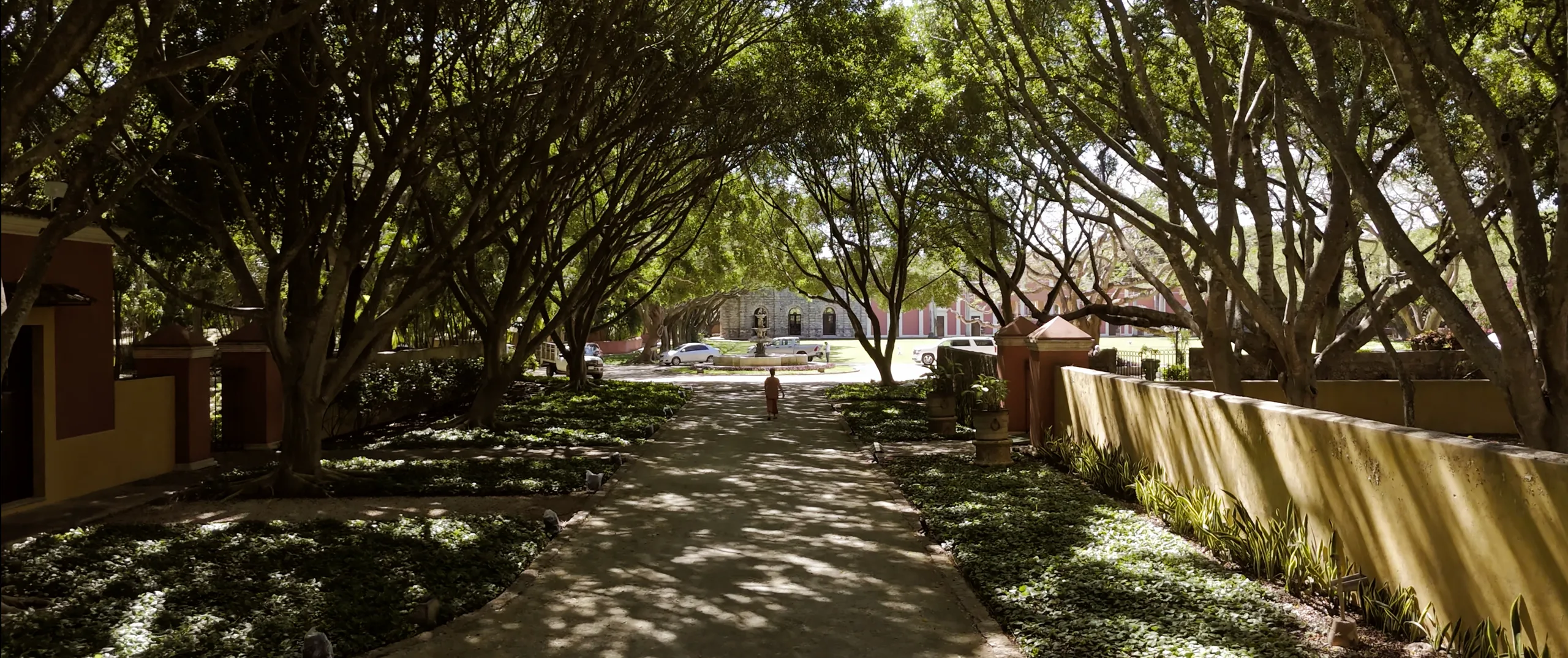
Some weddings are an afternoon. This one was three days, and by the time the celebration reached the hacienda, it had already been building for two of them.
María and Fer came from Mexico City, and so did most of their guests, though the room that finally gathered at Hacienda Xtepen held people who had traveled from far further: from other parts of Mexico, from Spain, from Japan. This is a filmmaker's account of that wedding. Not a summary of everything that happened, but the part I can speak to honestly, which is what I saw from the one seat at a wedding whose entire job is to watch, and what survived when I sat down to edit months of that day into a film.
You can watch the complete film here.
Three days in Yucatán
The rhythm of this wedding is worth understanding, because it shaped everything about how it felt. It opened on a Thursday night with an icebreaker at Salón Gallos, a well-known bar in Mérida, the kind of low-stakes first gathering that lets a crowd from three countries start to become one crowd. Friday was the civil ceremony, held privately for family inside a beautiful old rented house in the center of Mérida, followed by a meal. And Saturday was the celebration at the hacienda.
That structure is not incidental. A three-day wedding gives the guests time to arrive not just physically but emotionally, so that by Saturday the room is not a collection of strangers in good clothes. It is a group that has already laughed together, already eaten together, already loosened. When a celebration like that finally peaks, it peaks higher, because the runway was longer.
The hacienda
Hacienda Xtepen announces itself before you reach it. The entrance runs down a spectacular corridor of trees, and at the far end stand the old structures and the tower of the ingenio, the mill, from its past life as a sugar estate. To the right of the entrance sits the old casco, the heart of the hacienda, and that is where the wedding happened: in the courtyard, under flamboyán trees, the whole celebration held in their shade.
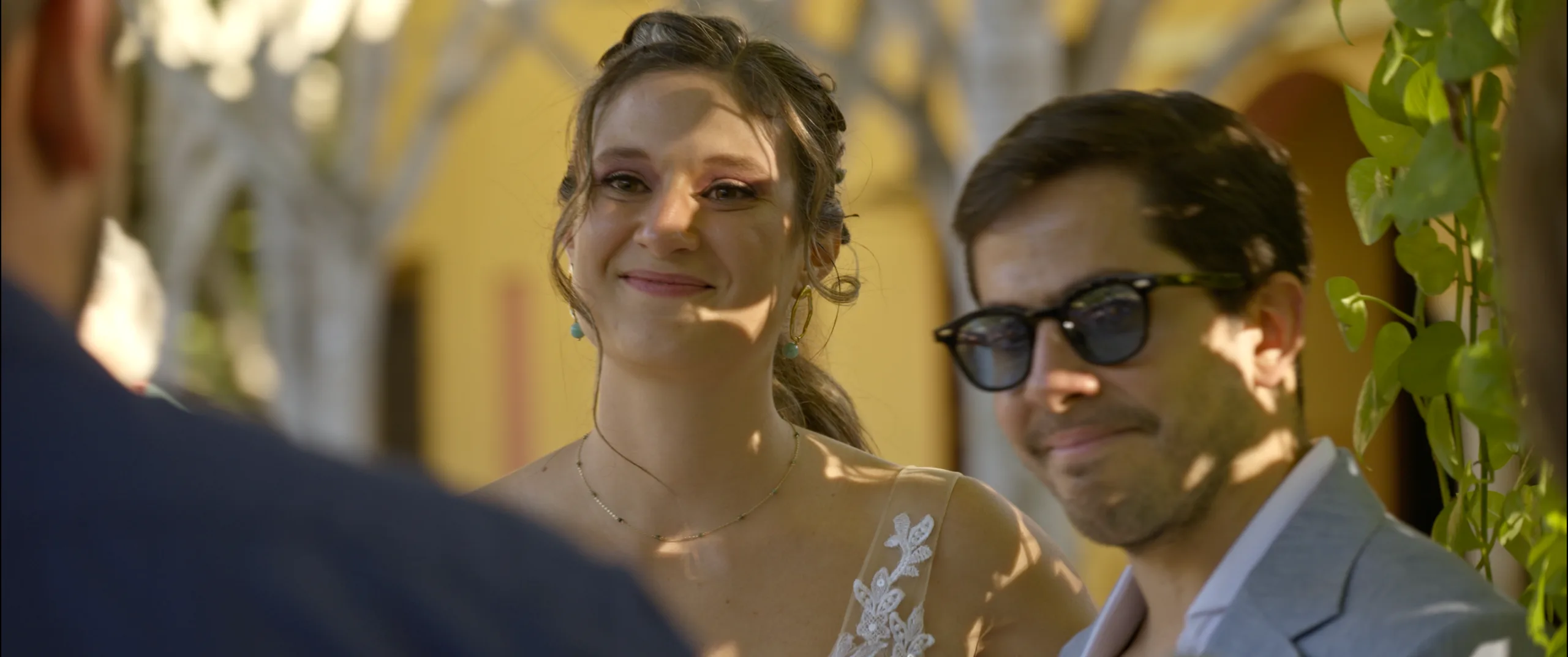
There was no religious ceremony here. What happened instead was, to me, more moving than most ceremonies I film. The people closest to María and Fer spoke: family members offering words to the couple, and the couple offering words to each other. And these were not the usual vows. They told stories. They recounted specific experiences, particular things about each other, the kind of detail that only exists between people who actually know one another. Some of it was very emotional, and none of it was performed for the camera. It was just true, said out loud, in a courtyard under the trees.
Late January in Yucatán gave us a sunny day without the brutal heat the region is known for most of the year. The trade-off was light: winter days are short, and a short day compresses the timeline, which is the kind of thing you plan around rather than fight. Not every moment on a wedding day is easy to capture, either. Getting drone coverage of the banquet, with aerials near where people were actually eating, took care and patience to do without intruding on the meal. These are the small operational realities of the work, the ones that never appear in the final film precisely because they were handled.
What survived: the father's song
There is a moment in every wedding I film that, months later in the edit, reveals itself as the spine of the whole thing. At this wedding it came after dinner.
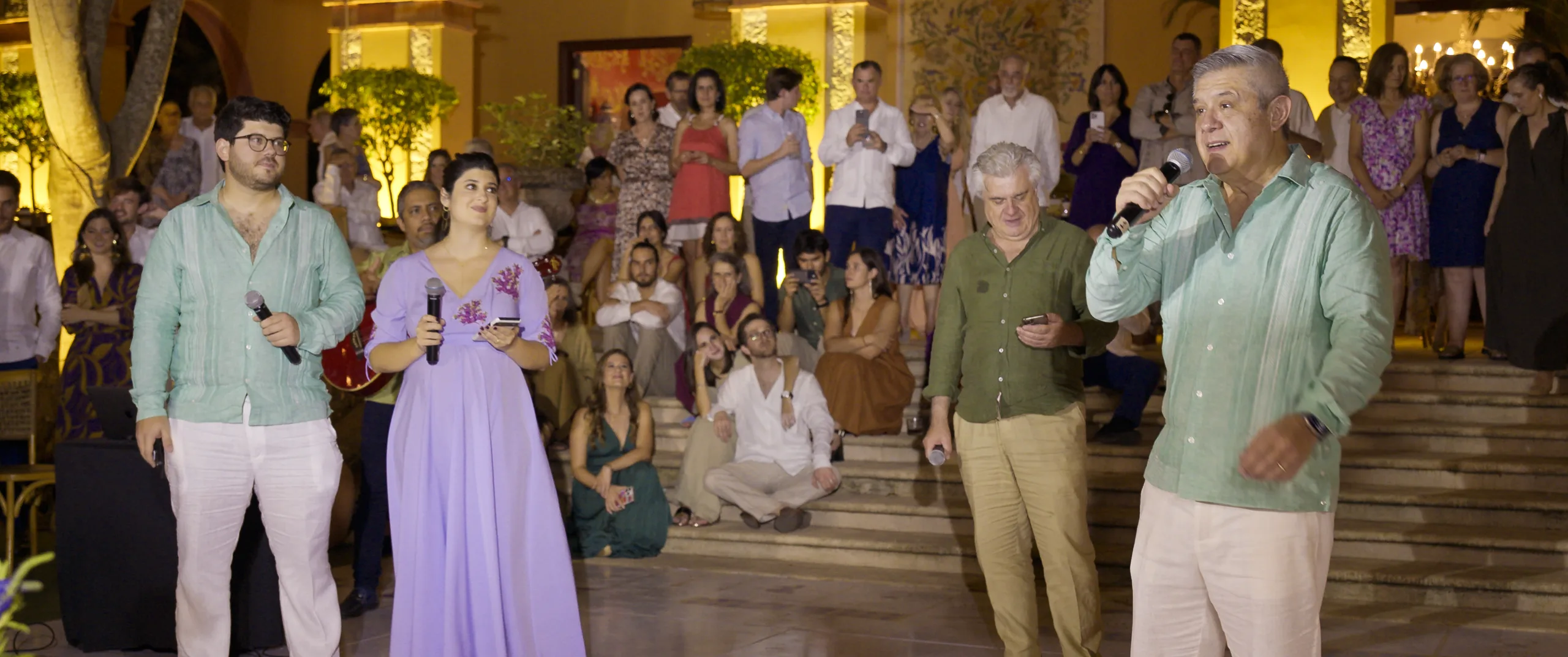
María's father, together with her brothers and an uncle, her father's brother, stood and sang to her. Not a song from the radio. A song he had written himself when María was born, kept, and saved for this.
When I edit, my job is to find which moments carry a film and which quietly fade. This one was never in question. I built that section of the film around the song almost in its entirety, letting it run, laying it over the reactions in the room and the images from the family and friends sessions. There was nothing to improve, nothing to shorten. A father who writes a song for his newborn daughter and sings it to her on the night of her wedding does not need a filmmaker's help to be moving. He needs a filmmaker who knows enough to get out of the way and let it play.
That is the part of this work that cannot be templated. You cannot plan for a father's song. You can only be the person in the room whose entire attention is on reading the day, so that when it happens, you are already there.
The night turned tribal
And then there was the party.
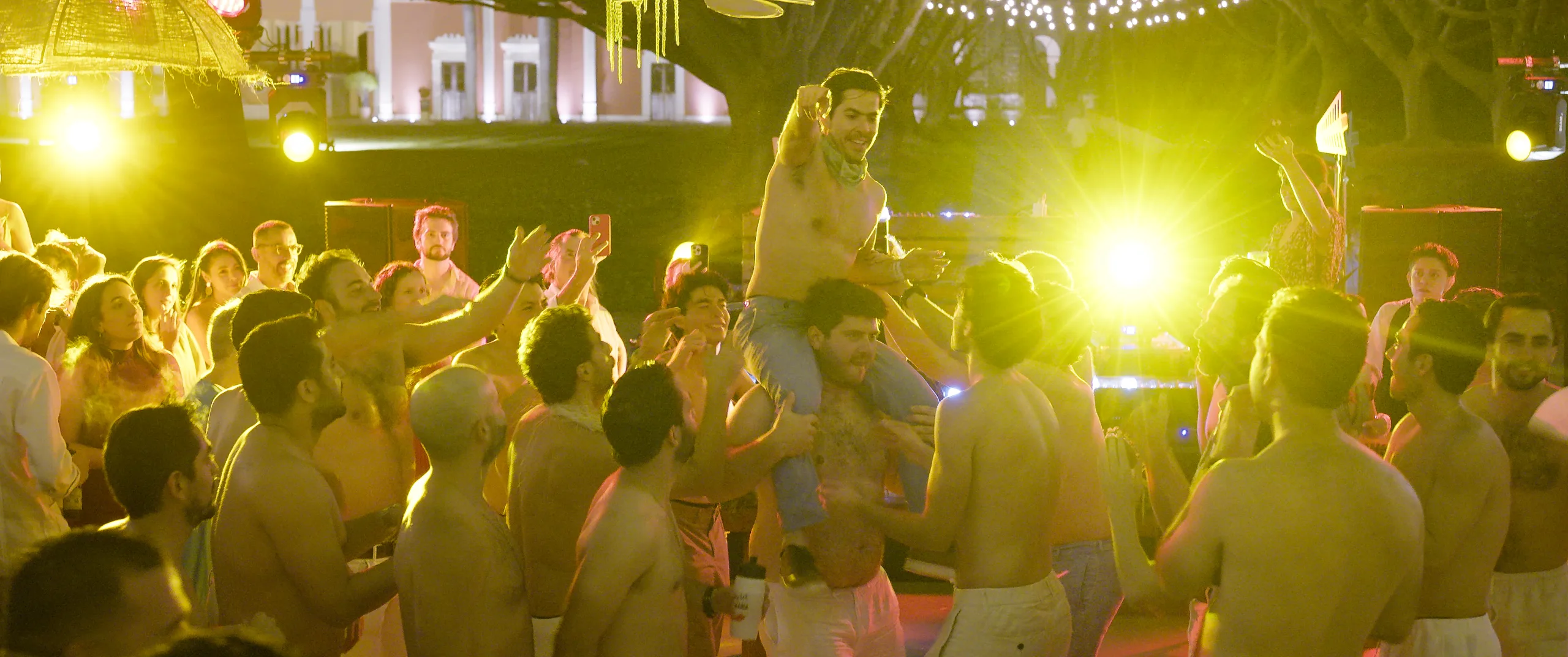
Two hundred and fifty people is a large dance floor, and this was a crowd of real dancers, the intense kind, the kind that fills a floor and does not leave it. It was already a strong night. Then, somewhere around half past eleven, a batucada arrived.
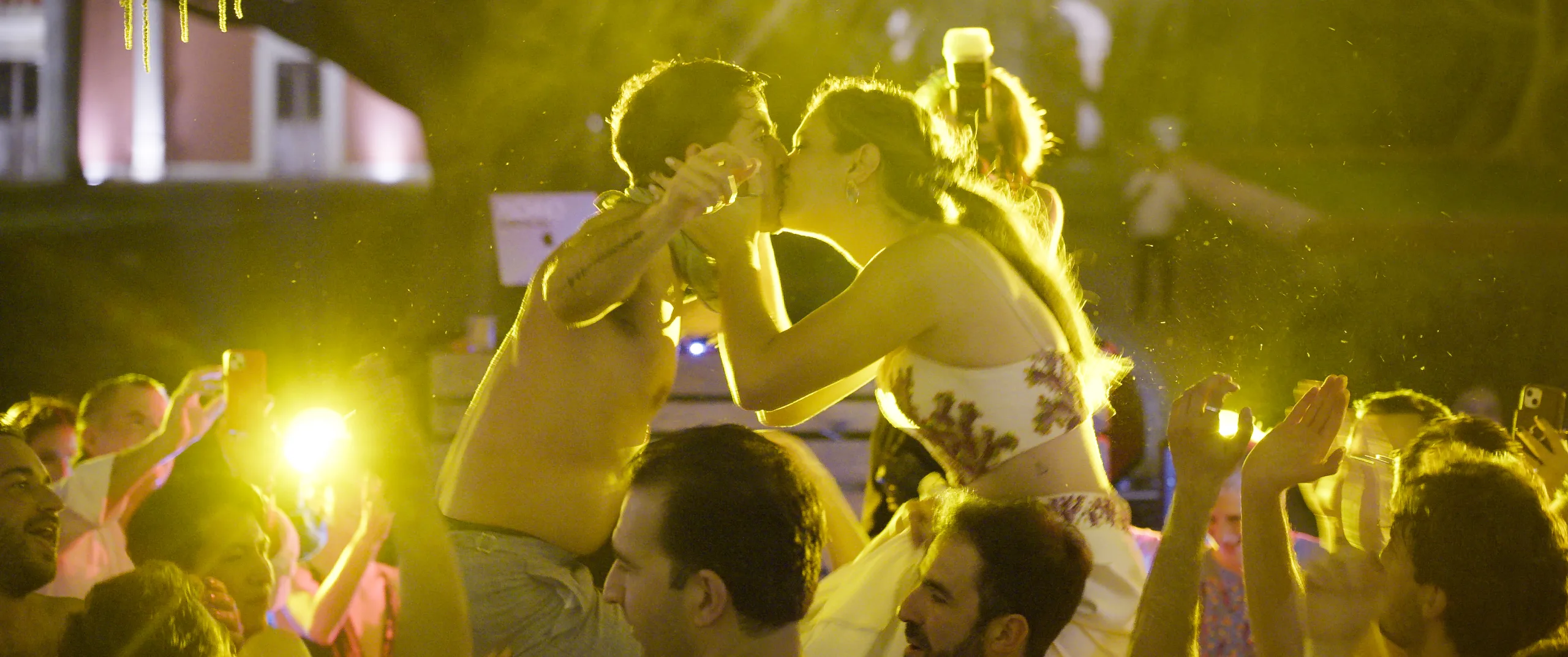
A batucada is a live percussion troupe, and when it enters a party that is already at full energy, it does not add to the night, it detonates it. The drums changed the room. The men who had been dancing took their shirts off and the dancing turned tribal, bodies and percussion and nothing else for as long as it lasted. When the batucada finished and the DJ's music returned, everyone dressed again and kept dancing, but that stretch, the drums and the shirtless floor and the raw physical peak of it, is one of the strongest sequences I have ever filmed, and it lives in the film exactly as it happened.
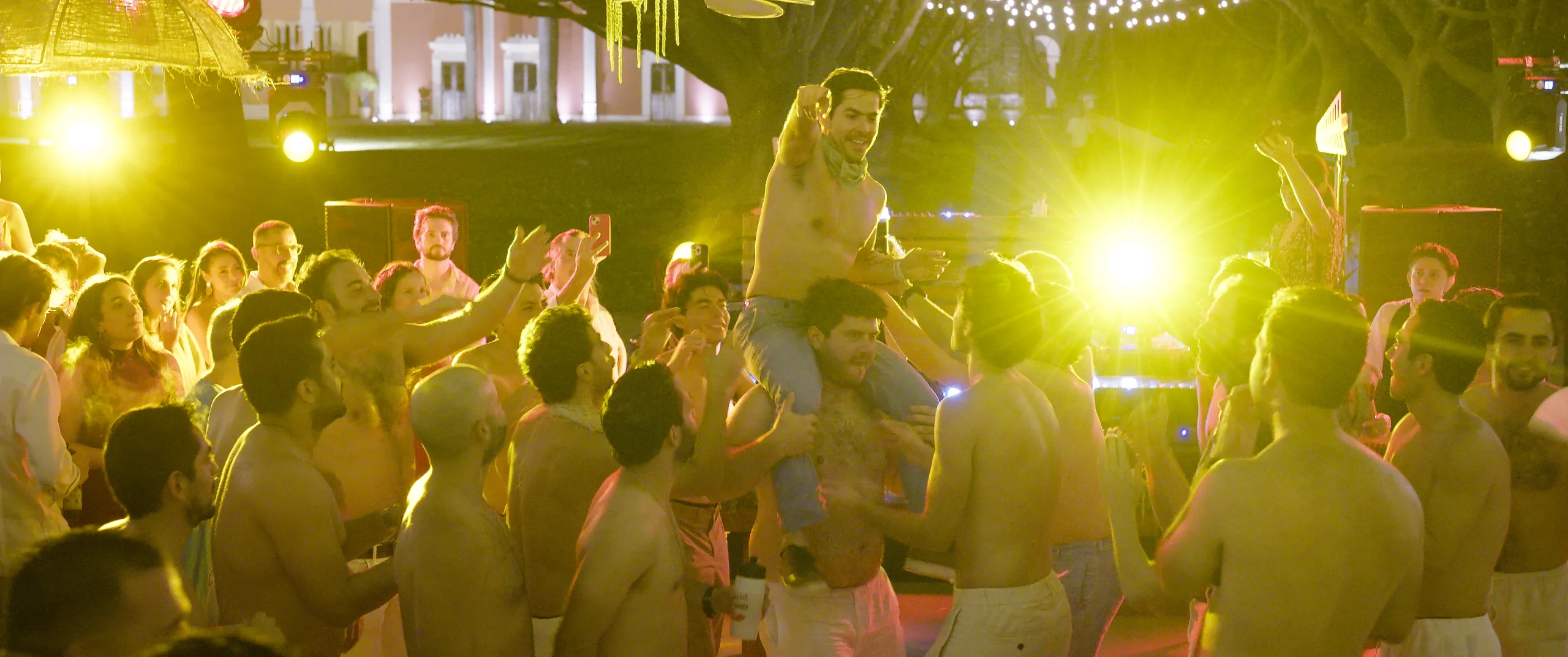
This is the part of a wedding most coverage treats as filler: some shots of the dance floor, generic music laid on top, and done. I build the reception like the climax it usually is, because a night that peaks like this one deserves to be filmed as the high point of the story, not the footnote. When a couple watches their film years from now, this is often the part they replay.
What this wedding was
Three days, three countries, a father's song, and a batucada that turned a courtyard into something primal. None of it directed, none of it staged, none of it recreated. My only job that weekend was to watch closely enough that the real moments were captured cleanly, and then to build them, in the edit, into a film that gives the day back the way it actually felt.
That is what a documentary wedding film is, when it works. Not a highlight reel of the prettiest shots, but the real story of a real day, told with enough structure that it holds up for the rest of a couple's life.
If you're planning a wedding at a hacienda in Yucatán, you can see how I work in the region on the Mérida and Yucatán page, or watch more complete films in the portfolio.
Frequently Asked Questions
Where is Hacienda Xtepen?
Hacienda Xtepen is a former sugar estate near Mérida, in Yucatán, Mexico, now used as a wedding and event venue. Its old casco, the historic core of the estate, includes a tree-lined entrance corridor and the tower of the original mill, and weddings are held in the courtyard under flamboyán trees.
Can you have a wedding at a hacienda in Yucatán without a religious ceremony?
Yes. Many hacienda weddings in Yucatán are symbolic or personal celebrations rather than religious ceremonies. At María and Fer's wedding, in place of a religious rite, close family members and the couple themselves spoke: sharing stories and personal words rather than traditional vows, a format that many couples find more meaningful and more their own.