
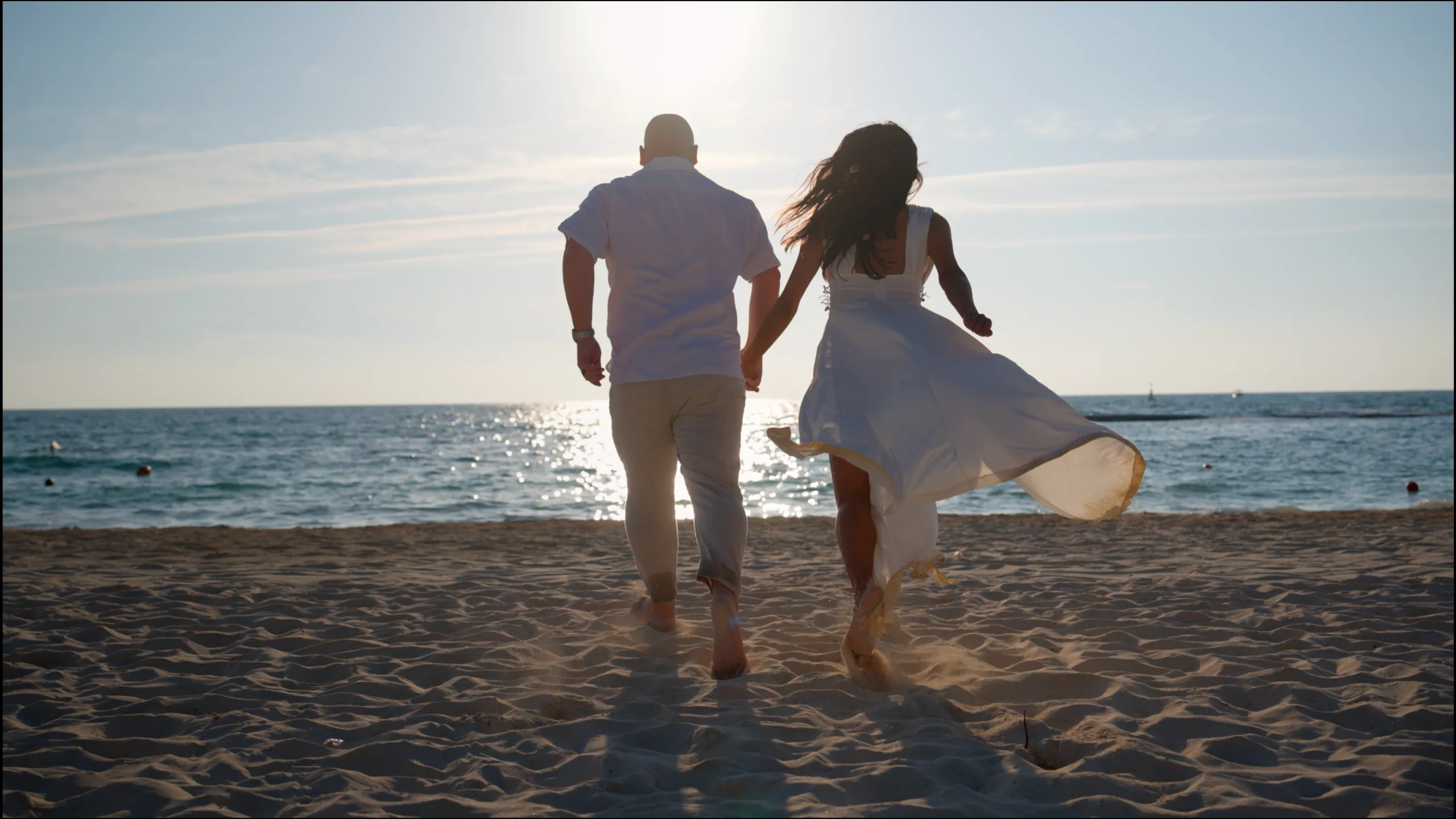
Ask when to get married in Mexico and you will get the same answer everywhere: high season runs roughly November through April, book early, avoid the rain. That answer is not wrong. It is just incomplete in ways that matter, because it treats Mexico as one place with one climate, and because it leaves out the variable that shapes how your wedding will actually look on film: the light.
This guide covers what the standard advice covers, and then what it doesn't.
The Caribbean coast: Cancún, Riviera Maya, Tulum
The dry, temperate window runs from late November through April. This is high season for a reason: lower humidity, reliable weather, and the coast at its best. The trade-off is demand. Peak dates book out furthest in advance, and everything from venues to vendors is at maximum price and minimum availability.
Two seasonal realities deserve honest treatment, because plenty of marketing glosses over both.
Hurricane season officially spans June through November, with the highest historical activity concentrated between August and October. This does not mean a September wedding is doomed; it means a September wedding on this coast should be planned by people who take contingencies seriously, with a reschedule clause in vendor contracts and a real weather plan at the venue, not a hopeful one.
Sargassum, the seaweed that arrives in floating masses, affects Caribbean-facing beaches in quantities that vary year to year and beach to beach, generally heaviest from spring through summer. Some stretches of coast are hit hard while others stay relatively clear in the same week. If a pristine beach matters to your ceremony, this belongs in your venue conversation directly: ask how the property handles it and what the nearby coastline has looked like in recent seasons, rather than relying on regional generalizations in either direction.
The light: what an east-facing coast actually means
Here is the part that surprises almost every couple, and that almost no planning guide mentions: the Caribbean coast of Mexico faces east. The sun rises over the ocean and sets over the land.
That means the classic image many couples carry into planning, the ceremony with the sun sinking into the sea behind them, is not geographically possible in Cancún, Playa del Carmen, or Tulum. What this coast gives you instead is warm late-afternoon light falling across the beach from behind the palms, and, for the ambitious, sunrise over the water.
None of this is a defect. Late golden light on this coast is beautiful, and a film built by someone who knows where the light will be at each hour of your timeline will always look better than one built on assumptions imported from a west-facing coast. But it is exactly the kind of thing you want to know before you fall in love with a Pinterest board photographed in Los Cabos, where the geography is different. The practical takeaway: when you plan your ceremony time, plan it around where the sun will actually be at your venue, not around a generic "sunset ceremony" template. It is also a fair question to put to any videographer you interview: where does the light come from at my venue at the hour we're planning the ceremony. The ones who know the corridor will have an answer.
Yucatán inland: haciendas and cenotes
The hacienda corridor around Mérida runs on a different logic. There is no sargassum inland and the hurricane exposure profile differs from the open coast, which is part of why this region keeps growing as a wedding destination. The honest trade-off is heat: Yucatán's interior is seriously hot and humid for a large part of the year, with the most forgiving stretch in the cooler months around November through February. María and Fer's wedding at Hacienda Xtepen, in late January, is a good example of that window: a sunny day without the region's usual heat, traded for the shorter light of a winter afternoon. The full story is here.
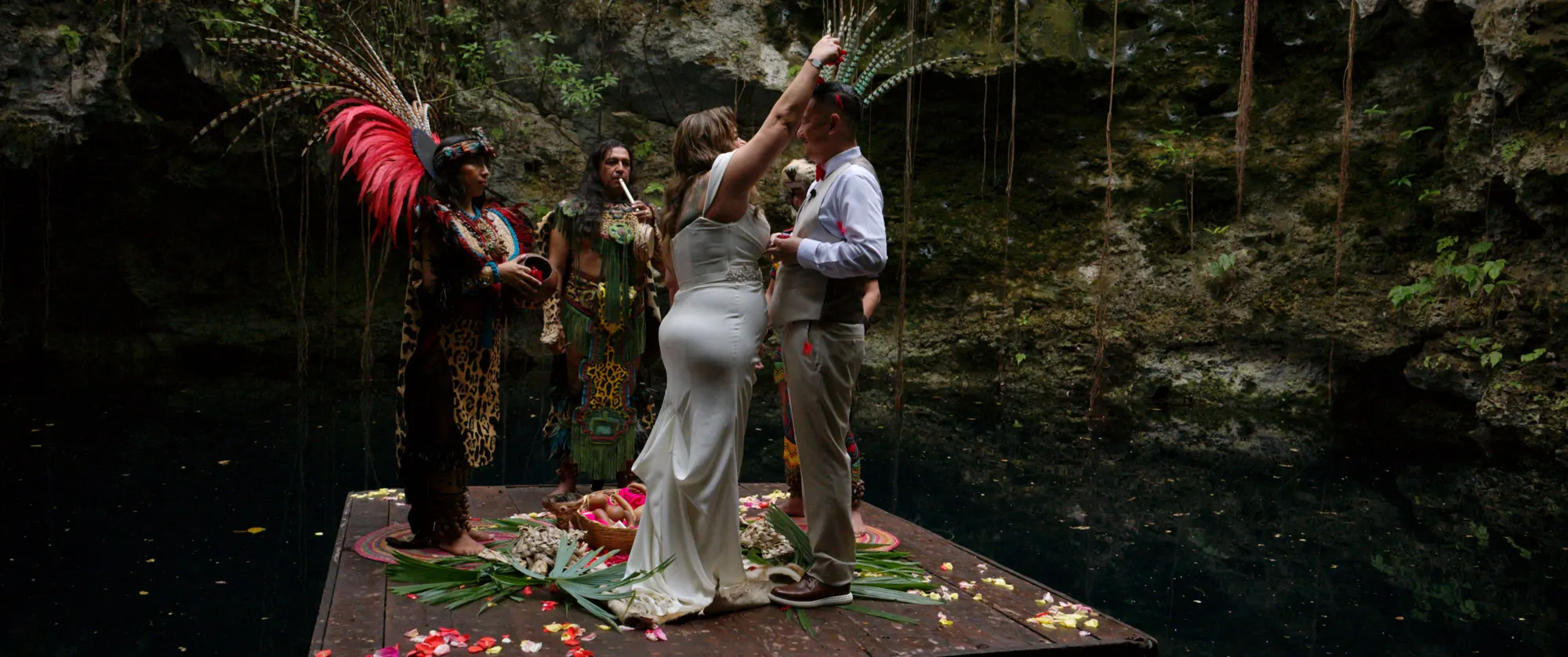
The rhythm of a hacienda wedding adapts to this: ceremonies late in the day, receptions at night under the trees or the arcades. For film, this region offers something the beach cannot: the deep textures of stone, patios, and cenote light, which behaves unlike anything above ground. A cenote ceremony shifts dramatically in mood over a single hour as the sun angle changes, which is a gift when it is planned for and a problem when it is not.
Timing beyond the weather
Weather is only one calendar. Three others are worth checking against your date.
Price and availability follow demand, not climate alone. The weeks around Christmas, New Year, and Easter carry premium pricing everywhere in Mexico. The shoulder months on either side of high season often offer nearly identical weather at noticeably better availability.
Your guests have calendars too. A destination wedding asks people to travel; midweek dates and long-weekend collisions change who can actually come.
And vendors have seasons. The vendors you most want are the ones whose calendars fill first for February and March. If your heart is set on peak season, the booking conversation starts a year or more out. If your date is flexible, the same team that is impossible in March may be fully available in June.
Closing thoughts
There is no single best month to get married in Mexico. There is a best month for your priorities: guaranteed weather, available vendors, budget room, a beach at its clearest, or light falling exactly where you want it during your vows. Those pull in different directions, and pretending otherwise is how couples end up surprised.
The useful move is to decide which two of those priorities matter most, and let them choose the date. And whichever date wins, ask every vendor you interview one simple question: what does my venue look like, and what does the light do there, at the exact hour we're planning the ceremony. The answers will tell you quickly who actually knows the place and who is working from a template.
For what filming looks like in each part of the corridor, see our guides to wedding videography in Cancún and Playa del Carmen and Tulum.
Frequently Asked Questions
What is the best time of year for a destination wedding in Mexico?
For the Caribbean coast, the most reliable window runs from late November through April: dry, temperate, and in highest demand. Yucatán's inland haciendas are most comfortable in the cooler months around November through February. The best month for your wedding depends on how you weigh weather certainty against availability, pricing, and what you want the light to do.
Can you have a sunset ceremony over the ocean in Cancún or Tulum?
Not over the water. The Caribbean coast of Mexico faces east, so the sun rises over the ocean and sets over the land. Ceremonies in Cancún, Playa del Carmen, and Tulum get warm late-afternoon light from the land side, and sunrise over the sea for those willing to schedule it. Sun-into-the-ocean sunsets belong to Mexico's Pacific coast, in destinations like Los Cabos and Puerto Vallarta.
Is hurricane season a bad time to get married in the Riviera Maya?
It is a higher-risk window that demands real planning, not a prohibition. The season officially runs June through November, with peak historical activity from August to October. Couples marrying on the Caribbean coast in those months should insist on a written weather contingency at the venue and reschedule or force-majeure language in vendor contracts.
What about sargassum? Will it ruin the beach at my wedding?
Sargassum affects Caribbean-facing beaches in amounts that vary widely by year, by season, and even by specific beach, generally heaviest from spring through summer. Rather than trusting regional generalizations, ask your specific venue how it manages seaweed and what its stretch of coast has looked like in recent seasons. Inland venues, like the haciendas and cenotes of Yucatán, are unaffected entirely.